Use solar during business hours
Where daytime demand overlaps with solar production, your business can use generated electricity directly and reduce grid energy purchases.

Turn available sunlight into a business asset.
Explore commercial solar around your operating hours, electricity demand and available space. From offices to industrial premises, start with a system that fits how your business works.
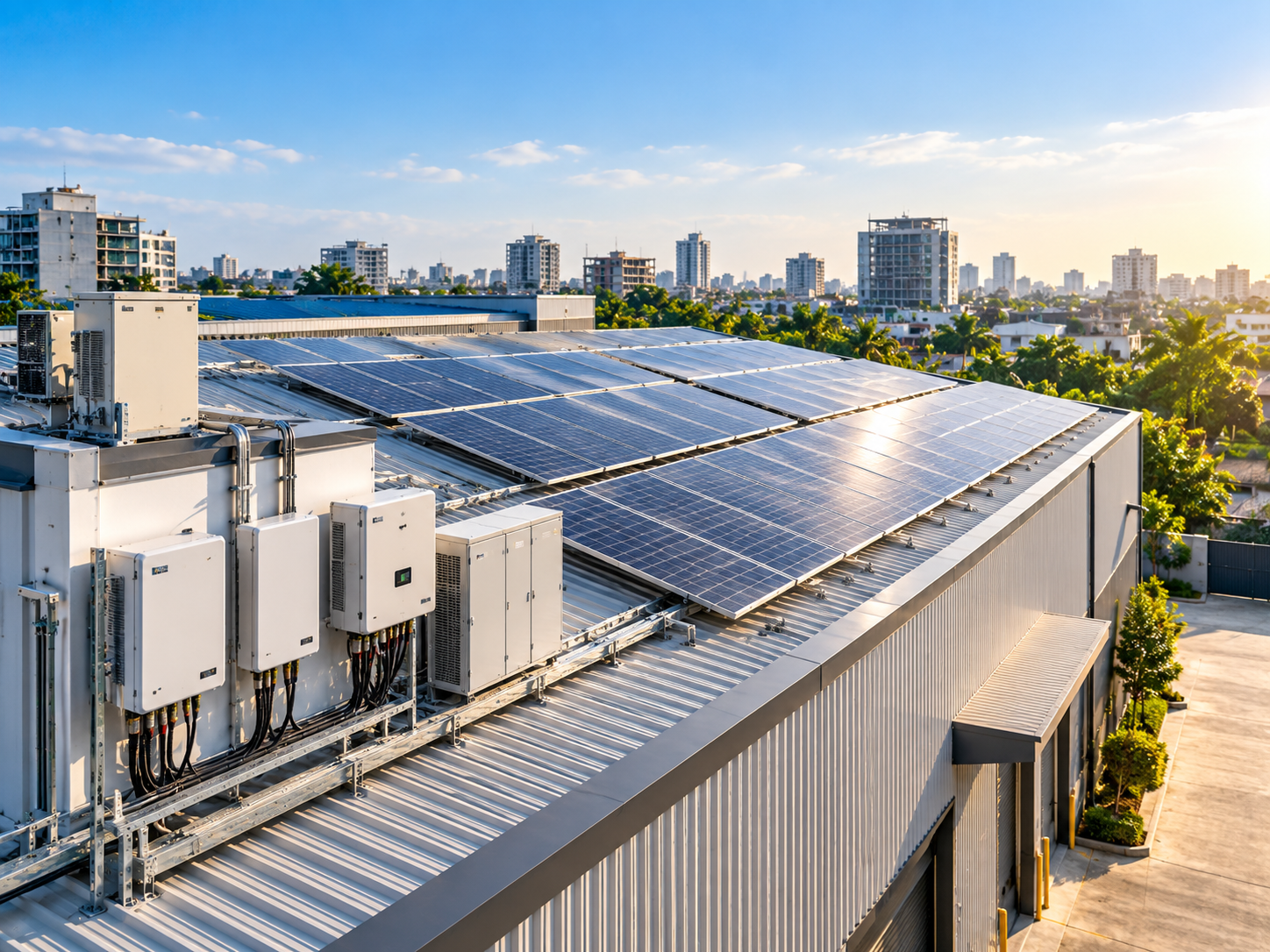 ILLUSTRATIVE STOCK IMAGE
The value of commercial solar depends on when you use electricity, what your site can support and how the system is designed.
Where daytime demand overlaps with solar production, your business can use generated electricity directly and reduce grid energy purchases.
Assess available roof or other suitable areas for generation, while accounting for structural capacity, shading, access and maintenance needs.
Use monitoring and an understanding of operating patterns to review performance and identify opportunities to improve self-consumption.
Select a setting to explore the questions that shape a commercial solar assessment.
Start with a load profile,
not a one-size-fits-all package.
Offices and retail premises may have daytime loads from lighting, air conditioning and equipment. Compare these patterns with expected solar generation.
 ILLUSTRATIVE STOCK IMAGE
Panel layout and mounting must suit the roof, structure and site conditions, with provision for safe access and ongoing maintenance.
Assess the existing electrical supply, distribution equipment, protection and cable routes as part of the connection design.
Define monitoring access, system documentation and operational guidance so your team can understand performance and support procedures.
Consider batteries where there is a defined use case. Backup, generator coordination and critical loads require specific engineering.
A useful proposal explains both the expected benefits and the conditions behind them.
Solar may reduce purchased energy, but it does not automatically remove fixed charges or every demand-related charge. Seasonal output, operating changes and utility arrangements can affect outcomes.
Any savings or payback estimate should be site-specific, with assumptions clearly stated. It is an estimate, not a guaranteed result.
A commercial assessment looks beyond roof area to the practical needs of your operations.
Review roof materials, structural suitability, waterproofing and any planned roof replacement.
Assess the supply, switchboards, protection, metering and potential upgrade requirements.
Plan safe access, material handling, work areas and any required electrical shutdowns.
Clarify property permission, connection requirements and responsibilities before work starts.
Tell us early. Solar, batteries and generators need compatible controls and protection. Do not assume solar will operate safely alongside an existing generator without a designed integration.
Plan each stage with the people who manage your site and energy use.
Review bills, operating hours, priorities and planned changes to electricity demand.
Inspect site conditions and develop the proposed layout and electrical scope.
Confirm the proposal, responsibilities, approvals and a practical installation plan.
Complete installation, testing and required connection steps, then hand over documentation and operating guidance.
Practical considerations for your next energy decision.
System sizing depends on daytime demand, operating patterns, usable space and electrical constraints. Where available, interval consumption data helps assess how much generation your site could use directly.
Some activities may require restricted access or planned electrical shutdowns. The scope and schedule should be agreed with your site team before work begins. Zero disruption should not be assumed.
A standard grid-connected system normally shuts down during an outage. Supporting critical loads requires a suitable backup design, compatible equipment and safe grid isolation. Solar alone is not a substitute for a continuity plan.
It may be possible with the necessary property permissions. Consider lease duration, roof access, ownership of equipment and what happens if the tenancy ends.
Ask about monitoring, inspection and cleaning requirements, safe access and support contacts. Review product, performance and workmanship terms separately, including exclusions and who handles claims.
Recent electricity bills, operating hours, site location, approximate roof details and any available load data are helpful. Mention generators, major equipment, critical loads and expansion plans.
Share your location, electricity use and priorities. Start with a conversation about the right approach for your business.
Images are illustrative stock photography, not completed Electrifying Bangladesh installations.