Use solar after sunset
With a compatible solar system, store surplus daytime generation for later instead of relying entirely on the grid in the evening.

Battery installation built around your priorities.
Store energy for later use and explore backup for the appliances that matter. Start with a clear plan for your home or business—not just a battery size.
 STOCK IMAGE
Different goals lead to different designs. Your energy use, existing equipment and backup requirements shape the right approach.
With a compatible solar system, store surplus daytime generation for later instead of relying entirely on the grid in the evening.
A properly designed backup arrangement can supply selected circuits during an outage. A battery alone does not automatically provide backup.
Understand when energy is available, when you use it and how much reserve you want to keep for potential outages.
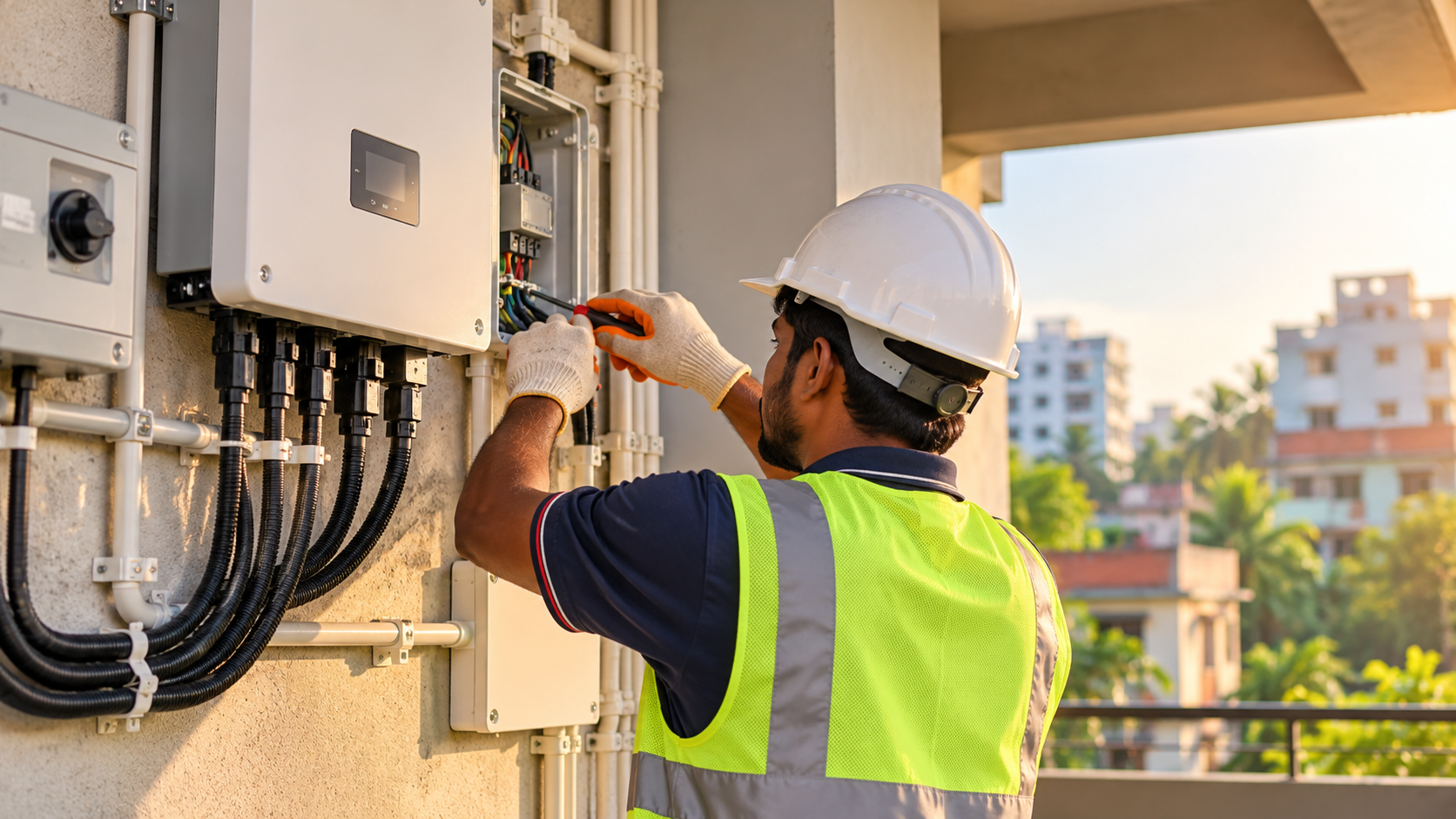
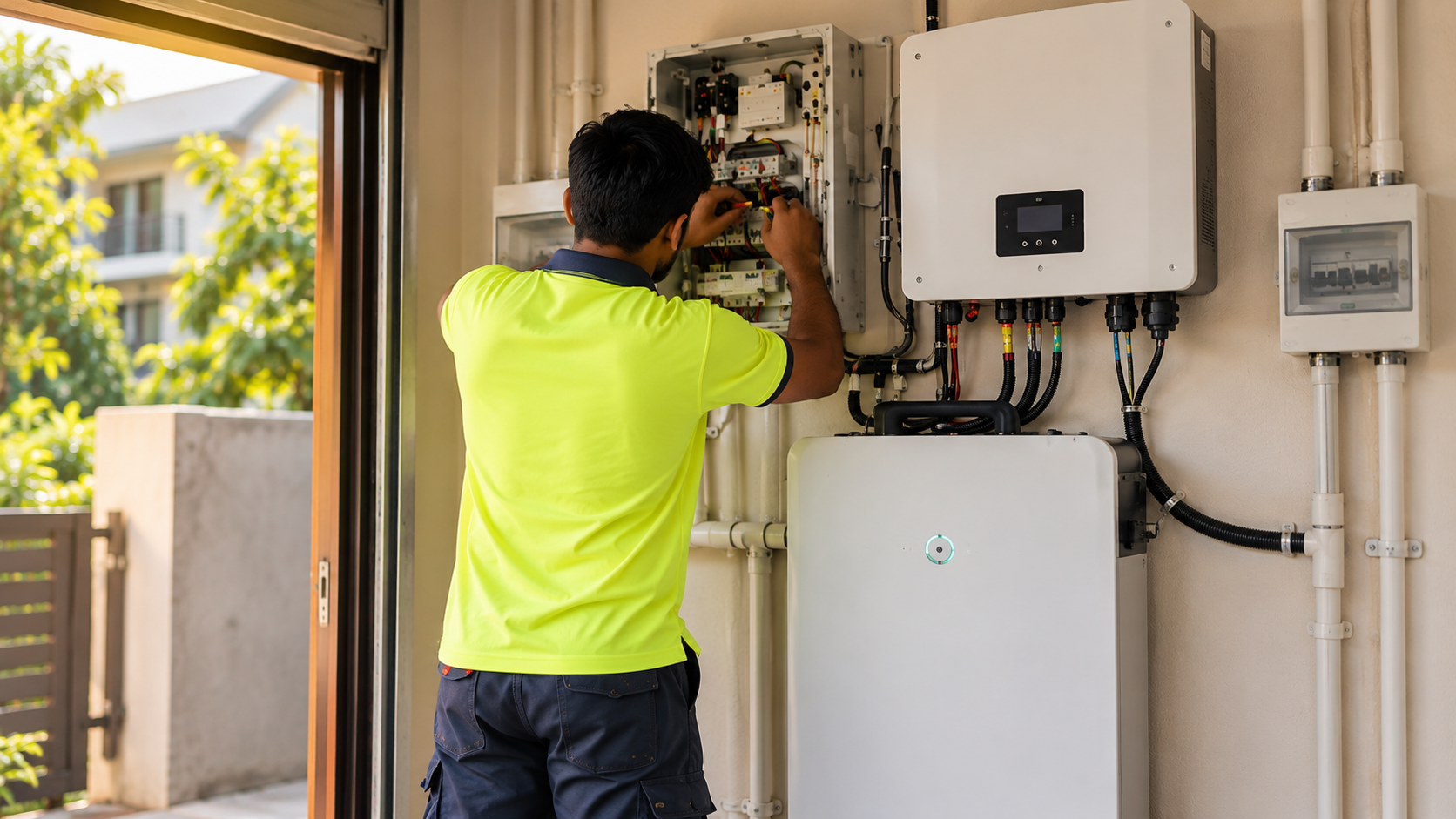
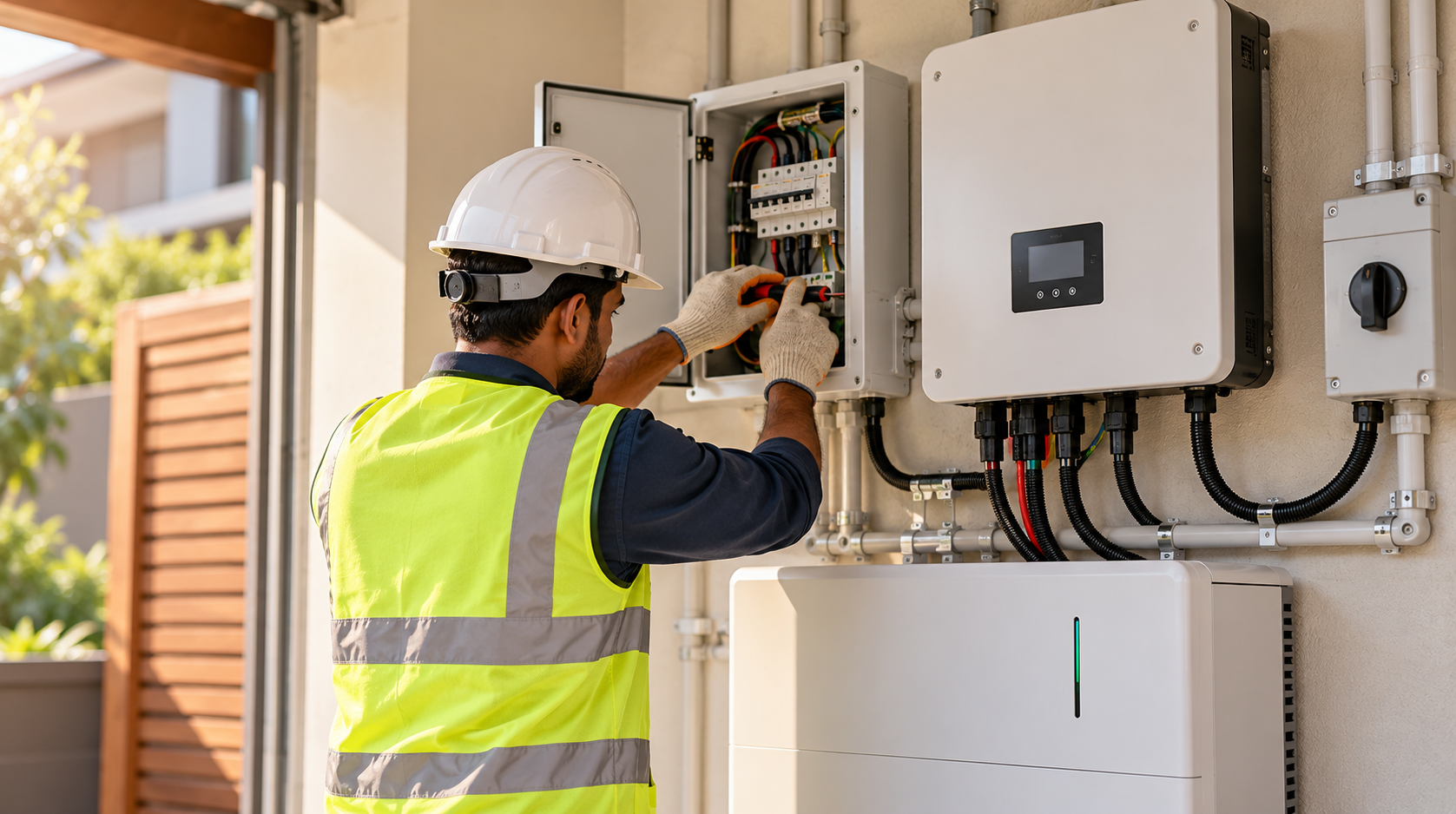
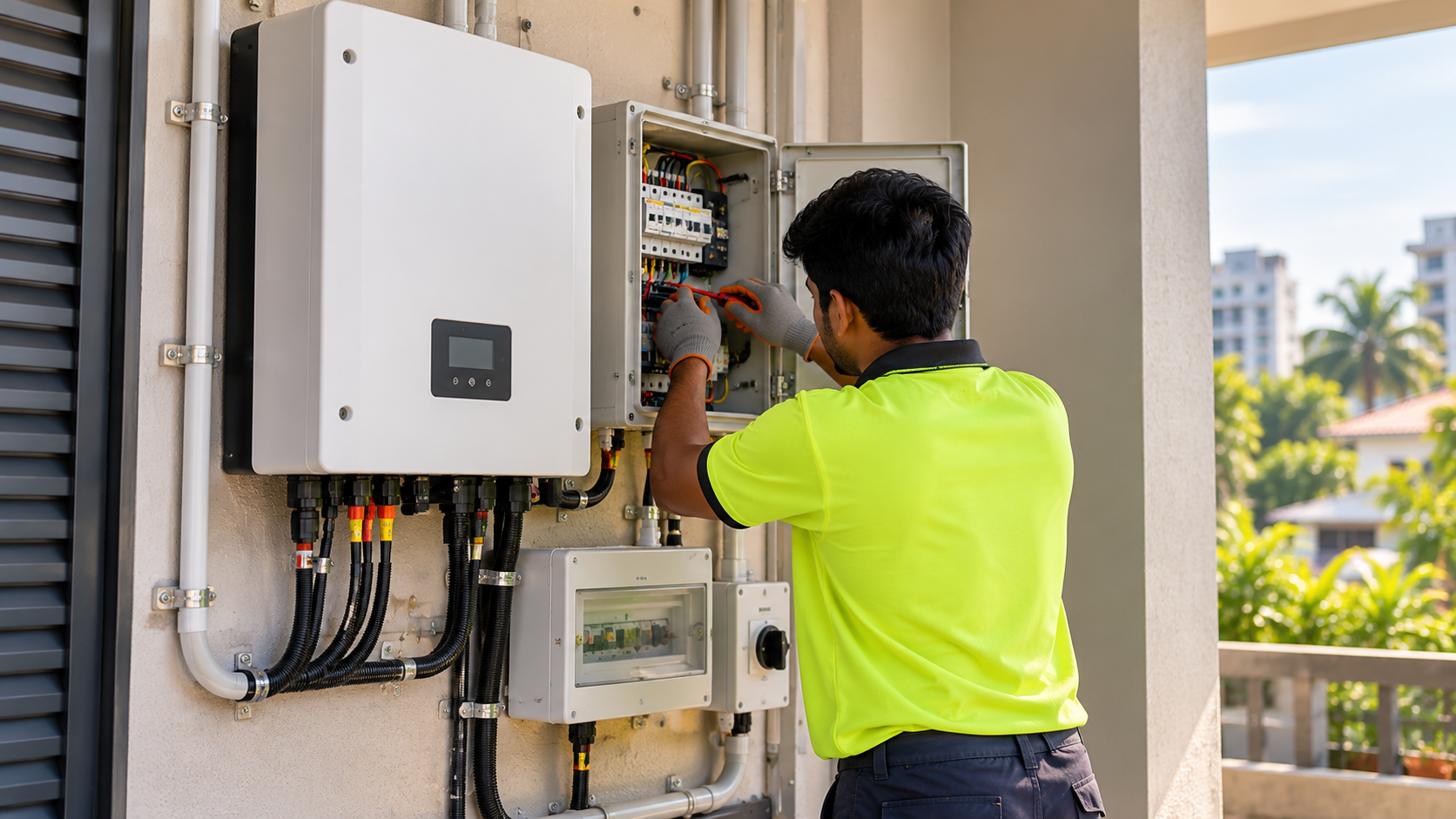
These stock examples illustrate equipment and installation work. Specific products and configurations are selected during assessment.
 STOCK IMAGE
Compare usable capacity, operating limits and warranty terms. Bigger is not automatically better.
 STOCK IMAGE
Check battery compatibility, power limits, protection and any changes needed to your existing system.
 STOCK IMAGE
Location, clearances, environmental conditions and access must follow equipment requirements and the site design.
Try this simple runtime illustration to see how stored energy and appliance demand relate. It is not a system recommendation.
Use the combined average demand of the appliances you intend to run. Check appliance specifications; starting power can be much higher.
Based on your selected capacity, average load and reserve.
Assumes a fully charged battery, 90% delivery efficiency, constant average load and no charging during the outage. Actual runtime varies with system losses, temperature, battery condition and operating limits.
Power limits matter too.This estimate does not check inverter output, surge demand, circuit suitability or battery discharge limits. Some loads may not run at all.
Illustration: usable capacity × (1 − reserve) × 0.90 ÷ load in kW. A site assessment is needed to size an actual system.
Start by deciding what matters most during an outage. Then design the battery, inverter and backup circuits around those priorities.
*Appliance compatibility, starting demand and runtime must be assessed.
They are different design scopes. Whole-property backup should never be assumed.
Air conditioners, pumps and cooking equipment can require substantially more power and storage.
Existing solar or generators need a compatible integration design, safe isolation and appropriate controls.
Whether you already have solar or are starting fresh, these details help define the scope.
Review usage, essential appliances, desired backup and future needs.
Check inverter details, switchboard condition and compatibility with the proposed battery.
Assess access, mounting, clearances, heat, moisture and potential flood exposure.
Confirm equipment, works, warranty terms, monitoring and support arrangements.
Understand the practical details before choosing a system.
Often it is possible, but compatibility must be checked. The solution may involve a compatible hybrid inverter or another suitable arrangement. Share your inverter model and existing system details during assessment.
Some systems can charge from the grid without solar. Suitability depends on the equipment, available supply and your intended use. Grid charging does not generate energy or automatically reduce your electricity costs.
Transfer behaviour depends on the system. Do not assume uninterrupted power for sensitive equipment. Discuss any critical equipment and its power requirements with a qualified professional.
Cost depends on capacity, equipment, electrical upgrades, backup circuits, cable routes and installation requirements. Request an itemised proposal showing the complete scope and exclusions.
Follow manufacturer guidance and monitor system alerts. Review warranty duration, throughput or cycle conditions, retained-capacity terms and exclusions. Leave electrical inspection and repairs to qualified professionals.
Some systems support expansion within specific limits. Check compatible modules, installation requirements, age restrictions and product availability before relying on a future upgrade.
Tell us about your property, existing equipment and the appliances you want to support.
Stock photography: Elite Power Group / Pexels. Images show illustrative installations by others, not Electrifying Bangladesh projects or confirmed product offerings.